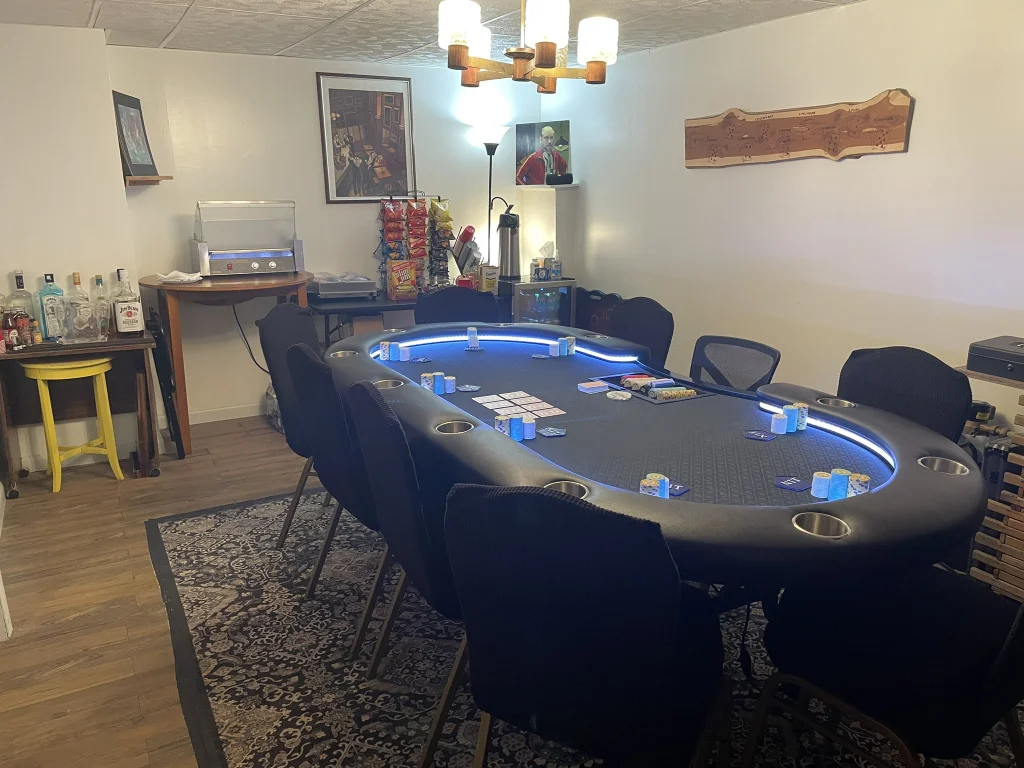
I'd like to chime in with my two cents (which is probably more than it's worth!)... There are a lot of good comments above, so I'm really just adding to and expanding on what has already been mentioned.
(This post got really long and self-indulgent - my apologies for that. But who knows - it might be useful!!!)
I've been a lighting designer since the early 1990's, and the thing about lighting is that it is very site-specific. There are rules, certainly, but what works well for one situation might not work well in another. I once consulted with Woodworker's Warehouse because they wanted a pre-packaged lighting solution for the custom outdoor patios that they design. But all of their patios were, well - custom! We went over four or five or their custom patio designs, and I explained how I would light all of them in different ways. They're all different - and that means that the lighting for each would be different as well.
The big rule is this: Light what you want to light, and don't light what you don't want to light. That sounds obvious, I know... But look at Anthrax's photo up above - they are lighting the table surface, but the pool table shade lights are probably low enough that the light bulbs are not shining directly in the player's eyes. So they're lighting what they want to light (the table top), and not lighting what they don't want to light (the players' eyes). A light fixture that is designed to project light down onto a table top might be much more suitable, rather than an open chandelier that sprays light everywhere (of course, if that's what you like, then go for it!! You do you...) The same principle goes for good lighting built into the rail: It will shoot across the table like low-beam headlights - illuminating the cards, without causing glare in the eyes of a player sitting across the table.
Anyway, that's all abstract design theory. I really want to discuss some of the technical specifications for modern lighting, and how they might be important to you:
Correlated Color Temperature (CCT): As mentioned in other posts above, this can range from very "warm" and "amber" (or "soft") at the low end of the scale (say, 1800K), up to "cool" and "blue-ish" (or even "harsh") at the high end of the scale (around 5000K or 6000K). What quality of light do you imagine for your room? Warm and soft - cozy, perhaps? You might want to go with a lower CCT. Or do you like the bright and active appearance of some Texas card rooms? Then you might want to go with a higher CCT. Keep in mind that the most common range of CCT values is (generally) 2700K up to 5000K. A clear blue sky has a CCT of 10,000K, which is wonderful outside on a beautiful autumn day. But if you tried using 10,000K lighting in a poker room with no windows, you'd burn your retinas out, metaphorically speaking. Even 5000K can appear a bit harsh to some people - although other people love it.
A lot of big box stores have really good return policies, so you might go out and buy a few light bulbs in different color temperatures. Find a single brand of LED light bulb that is available in, say, 2700K, 3500K, 5000K - whatever. Find a nice range. Bring them home, and try each one in your poker room, at night. And see which one you like better. Finding a CCT that suits your own tastes and best suits your room can make a really big difference in how your places looks and even "feels". Even if you then return all of these lamps, you'll at least know what CCT suits you the best, and you can shop for other fixtures with that CCT in mind.
Color Rendering Index (CRI): (TL;DR - higher CRI is better. 90 CRI is good, 95 CRI is really good, and 97 or 98 CRI is really really good.) Remember when you were a kid, using a prism to split sunlight into a rainbow? That's what CRI describes - a complete rainbow with no colors missing would be CRI 100. Pure white light is made up of all the colors of the rainbow (technically, the complete range of frequencies of light, from deep red at one end to deep blue at the other end). But because the artificial light from LEDs or fluorescents is imperfect, some colors of the rainbow will actually be missing, or at least will be incomplete. If you were to use a prism to split the light from an LED or a fluorescent light source, you would see that some parts of the rainbow are actually missing. CRI is a measurement of how complete the rainbow is for a given light source. CRI of 100 is a theoretically complete rainbow of a standard incandescent source (I'm glossing over a lot of technical detail here).
Why is this important? Have you ever noticed that the colors inside your house at night are not nearly as bright and vibrant as they are outside on a clear and sunny day? The sun has a complete rainbow, so all the colors are represented, so your eyes can see all the bright colors. But if the light sources in your house are literally missing some colors of the rainbow, then those colors will be missing in your eyes' perception of objects that you're looking at. You can't see a color that isn't there. So you want your lights to have as complete a rainbow as possible. And the closer the CRI value is to 100, the more complete that rainbow will be.
The appearance of any colored object that you look at depends on the CRI of the light source. If you have a piece of artwork with many different colors in it, but your light source is missing the deep red portion of the rainbow (this is common with all but the highest CRI sources), then that piece of artwork will appear dull, or muted, as a lot of its reddish colors will not have the necessary color spectrum to reflect into your eyes. So, your artwork, your chips, your cards - everything will look better if your CRI is as high as you can get it. (I once designed the lighting for an art gallery, and the client paid a premium for the highest CRI light sources we could acquire - absolutely mandatory for something like that.)
This is the same reason why I don't like colored rail lights. Some tables have blue rail lights - which just means that all of the other colors of the rainbow are missing from that light. If your light source is only one color, then all the things it shines on will also appear to be very monochromatic: The colors of your chips will probably look weird, and might be difficult to differentiate. And if you're playing cards with a 4-color index, then the red, green and blue ink on the cards won't look the way you expect them to.