OK. weighing in. Understand my advice comes from a long history in the biking industry, as a consumer, racer, biking instructor, and even in product development. That said, take my advice with a grain of salt. My brain is buzzing about this, so my post might be scattered brained (apologies).
I'd caution you NOT to take advice that narrows you down to a specific brand or model. There's no doubt the bikes recommended are likely solid contenders, but the advice I give newbies is that it's much better to get a $400 bike that fits YOU great, than a $4000 bike that fits you OK. The other piece of advice is that you want a quality brand name (no huffy, murray, Walmart brands, etc...).
There are exceptions, for instance my wife has a $3000 Schwinn MTB that is solid quality, but I've seen Schwinn's in Walmart/Target that I'd consider junk. The adage that "you get what you pay for" is generally accurate with bikes in this price point. An exception would be with very high end bikes/components, where you spend double the price to bump to a better component, with minimal gains. I don't think this applies to you at this point anyway.
My advice to newbies is to head to their local bike shop (the biggest shop you can find will offer the best selection and likely better deals/sales). Small shops are awesome, but the pricing is usually indirectly proportionate to their size of inventory.
Then consider the psychology of the purchase. Most bike customers roll in, say "I want a $500 commuter", then take a couple bikes on a "test ride" around the parking lot, and say "this one feels good" and that's the extent of it. Bike shop employees might give you ok service and attention, but they realize that 90% of these bike customers will convert that bike into a clothes hanger within a year. This isn't a customer a bike shop employee is bound to get excited about.
To garner the best customer service, and to get the best bike, take the buying experience seriously. Bring biking clothes (shorts, etc...), and plan for a good hour+ in the shop. Walk in and explain to the employee that you want a bike for commuting, plan to ride this every day, and want a bike that will last you a lifetime. Explain to them that you want them to select out a few options in your price range, and that you intend to take EACH option for a 15+ minute test ride in the area. Understand, most competent bike shop employees KNOW that it takes at least that long for you to get
uncomfortable on a bike, for you to feel what doesn't feel right about a particular bike's fit and geometry. This is the kind of buyer a bike shop employee gets excited about. They work at a bike shop because they like bikes, and if you just walk in and tool around the parking lot, they're gonna be like "meh"... Just like as if you worked at Spennetti's and someone walked in a said, I'd like some official casino weight chips please...
In addition to getting the better service, you'll actually walk away with a bike that fits you way better, and that will translate to less pain while riding, more enjoyable rides, and a slimmer you! Nobody continues to ride a bike that hurts them...
This is also a reason I'd caution against utilizing Craigslist or buying used. Sure, you might get a good deal, but you'd have to know what you're looking for. You might get a decent deal, but often times, it's not going to be the ideal size for you, and the fit might feel "ok" at first, but after 10 miles on the bike, you might regret the purchase. You might actually spend more in the long run... And be aware that not all frame cracks are easily seen by untrained eyes. You don't want to buy a bike that was involved in crash. Last summer, I had a trained cyclist come to my week long bike school, with a bike he asserted was "solid". He'd received the bike from his department. Upon my inspection, I noticed evidence of damage (indicative of a prior crash). We took the bike to a local shop for them to replace some of the broken components, and have it inspected by a proper mechanic. After $100 of repairs/parts, the bike was deemed good to ride, and later in the week, the rear derailer fell off the bike (major fail), another $180 fix. The derailer had sustained a crack in it (impossible to see upon inspection), which eventually failed. We can only surmise it was due to the prior crash. I later learned of the bike's involvement in a crash, and was told it had been inspected and cleared by their local mechanic (I strongly recommended they find a new mech).
Now, as to choosing between bike types... If your only use will be commuting (or tooling around the neighborhood or for some fitness rides), I'd look at hybrids. These are a cross between road bikes and mountain bikes. Their upright geometry is often better suited to newer riders (more comfortable). Granted, a hybrid can be taken on road rides, and likely some light trail rides, but does neither particularly well. When my wife started training with my triathlon team, I always advocated newbies just ride what they had, then figure out their needs/likes before dropping serious coin on a race bike. My wife had a hybrid, so I outfitted as best as I could to go fast... but 5 minutes into our first "group" team ride, my wife (just dating back then) got dropped. Yup, the very next day we were in the bike shop looking for a "fast" bike. (ps. I stayed with her on that group ride, obv).
I've also had friends come mountain biking with us, and bring their hybrids. I'm very receptive to new people joining in on activities (it's how interest grows), so I did my best to accommodate. Hybrid bikes are OK for crushed gravel trails, but they are not appropriate for trails with lots of obstacles (buried roots/rocks, and drop offs). One, most hybrids lack suspension (or their suspension is woafully inadequate). Two, off road trails can be brutal on frames/components not sturdy enough to handle them.
Most commuters I know ride bikes closer to road bike geometry and styling. These will get you to your destination faster, but road bikes have a difficult time on even the lightest of trails, and can be harsher on the body (albeit slightly).
Mountain bikes are going to be generally more comfortable to ride, with "plush" (god I hate that word) ride tendencies due to larger tires. But if you're looking to ride with others, understand you won't be as fast. The bikes will have the ability to ride singletrack trails though, which is a bonus if you're considering utilizing the bikes for recreational trail use, in addition to commuting.
Ultimately, this argument is one I've heard many times. Someone wants a do-all bike, and that's a very difficult proposition (it's why I have 10+ bikes in my garage at present). It's up to you to determine what you want in a bike. Go in educated, and make the best purchase possible, given you budget.
Good luck, and let us know how it goes!

w/ pics of course!



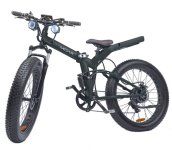


 Loved that bike more than any carbon fiber I've ever ridden...)


