

*long post warning & no chip pr0n*
Finally have some time to check out my local cardroom at Ocean’s Eleven. Thought would start a thread and share if there’s anything of interest on the journey.

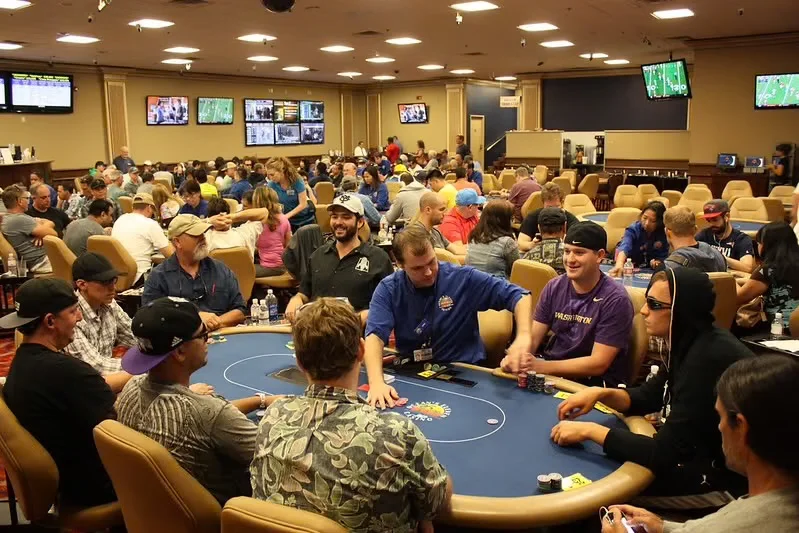
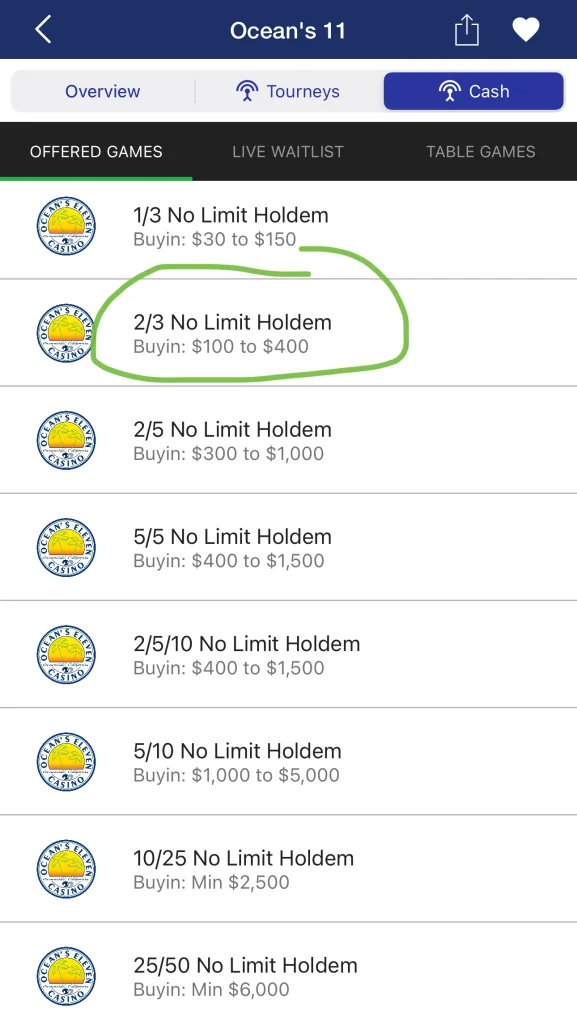
Will start at their $2/$3 $400 buy in and see how I do over a number of sessions before considering the 2/$5:
Asked ChatGPT strategy for this buy in at this cardroom (seems fairly ABC with no real location specific insight, however I’m always impressed how fast it does this and the prompts/decent reminders):
Key Strategic Principles
With ~133 BB stacks, you have more maneuvering room than the “100 BB standard,” but you also might face deeper stacks from older players or players buying in more (if allowed). Here are some tweaks:
Here are rough hand ranges and how to play from certain positions with a $400 effective stack:
What to Watch Out For at Ocean’s Eleven (or similar live San Diego games)
(Ocean’s Eleven, San Diego — ~133BB stacks)
 Core Goals
 Preflop Strategy
Raise Sizes (standard, adjust for table):
Opening Ranges
 Postflop Play
 Player Types & Exploits
 Stack Depth Tactics (~133BB)
 Session Mindset
 Quick Mantras at the Table
Finally have some time to check out my local cardroom at Ocean’s Eleven. Thought would start a thread and share if there’s anything of interest on the journey.
Will start at their $2/$3 $400 buy in and see how I do over a number of sessions before considering the 2/$5:
Asked ChatGPT strategy for this buy in at this cardroom (seems fairly ABC with no real location specific insight, however I’m always impressed how fast it does this and the prompts/decent reminders):
Key Strategic Principles
- Bankroll & Buy-in Discipline
- $400 is a healthy buy-in for $2/$3, gives you some cushion for variance.
- Make sure you have enough buy-ins for this stake overall (i.e. you can afford losing a few sessions). Live games swing.
- Avoid over-committing when you don’t have a strong hand or when pot odds / implied odds are weak.
- Table / Opponent Observation
- Live games tend to have more recreational players who are looser, play weird hands, call too much, mis-size pots, etc. Identify who plays too loose, who is tight, who bluffs too much.
- Punish calling stations (players who call lots of bets even with weak hands) by value betting strong hands.
- Hand Selection & Position
- Play tighter from early positions; loosen up in late positions (cutoff, button).
- Prefer hands that can make strong showdowns: high pairs, strong aces, broadways, suited connectors (especially in position), etc. Avoid marginal hands out of position.
- With $400 buy-in you have enough depth to make speculative hands worthwhile when you can see flops cheaply.
- Aggression & Pot Control
- Be the preflop raiser rather than limper. Raising gives you initiative.
- When you hit strong hands, bet for value. If opponents call too much, don’t be afraid to build pots.
- Be selective with bluffs. In live games many players call down light, so bluff only in good spots (one opponent, good blockers, etc.).
- Bet & Raise Sizing
- Raise preflop enough to give respect and thin the field (i.e. 3-4× BB when UTG or early position, possibly more if there are limpers).
- Post-flop bets: if you continuation bet, bet a sizable fraction of the pot (50-75%+ depending). Don’t allow free cards to draw cheaply when you hold the best hand.
- Adjust size depending on stack depth, villain tendencies, pot size, number of players.
- Adaptation & Exploitative Play
- If a player never folds, stop bluffing him. If someone raises too much or is too aggressive, trap or re-raise more.
- Watch for patterns: “this guy always bets large when he misses” etc., and counter appropriately.
- Patience & Tilt Control
- Don’t force action. Wait for good spots.
- Live games are slow; there will be many hands you fold. Let that be.
- Maintain emotional control after bad beats. Because live variance is large.
With ~133 BB stacks, you have more maneuvering room than the “100 BB standard,” but you also might face deeper stacks from older players or players buying in more (if allowed). Here are some tweaks:
- Wider Call-Horizons for Implied Odds:
With deeper stacks, speculative hands (small pocket pairs, suited connectors) are more valuable when you can see flop cheaply and potentially win big pots. But don’t over-commit out of position. - 3-Bet / 4-Bet More Carefully:
Deep stacks make post-flop play more complex; 3-betting light can be profitable if you’re confident playing deep postflop, but riskier. Use 3-bets for value more than as bluffs unless you know the player well. - Stack Protection:
If your stack is large relative to others, avoid getting into big pot confrontations where you’re potentially dominated. Strong speculative hands are good, but don’t commit unless you have decent equity or good fold equity. - Pressure in the Right Spots:
Because many players at this level don’t play perfectly, use aggression: open raises from late position to steal blinds, continuation bets when you believe opponents are weak or will fold, applying pressure on turns/rivers when you sense weakness.
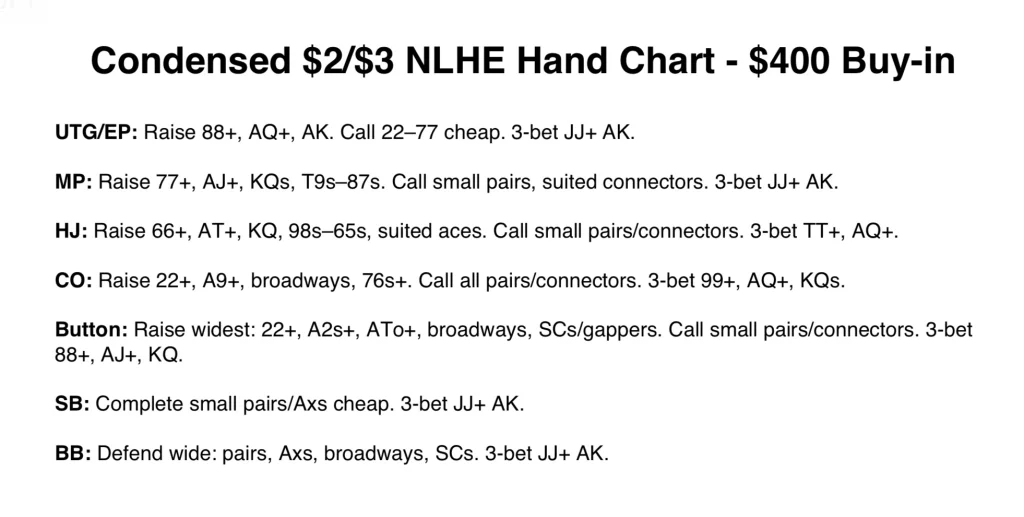
Here are rough hand ranges and how to play from certain positions with a $400 effective stack:
Position | Preflop Hands to Raise | Hands to Occasionally Call / Limp |
| UTG / EP | Pocket pairs 88+, AK, AQ suited, maybe JJ depending on table tightness | Occasionally small pairs or suited connectors if many limpers and deep stacks |
| MP / HJ | 77+, AQ, AJ, KQ, suited connectors (T9s-76s), maybe KJs/KTs | Suited gappers, weaker broadways in late MP if facing weak opening ranges |
| Cutoff / Button | Open a wide range: small/mid pairs, suited connectors/gappers, broadways, strong aces | Occasionally limp to mix in, or call raises with suited connectors or suited aces for implied odds |
| Blinds | Defend more often, especially vs steals; 3-bet light if profitable; be cautious out of position postflop | Fold weak hands with no redraw potential, avoid sticky calls without good odds |
What to Watch Out For at Ocean’s Eleven (or similar live San Diego games)
- Rake and table stakes rules: make sure you know the casino’s rake structure. Sometimes they have kill pots, straddles, etc., that can change pot size dynamics.
- Players might pull out chips, change buy-in amounts, re-enter etc. Be alert to stack sizes.
- Be aware of local typical play styles: maybe players are more passive, or more loose. Adapt quickly.
- Physical tells: live environment gives you more info — betting speed, body language, how players handle chips, reactions, etc. Use it.
(Ocean’s Eleven, San Diego — ~133BB stacks)
Core Goals- Build pots with value hands (people call light).
- Avoid big pots with marginal hands (easy to get trapped).
- Use position + aggression to control the game.
- Observe player tendencies (station, nit, bluffer, limp-happy) and exploit.
Preflop StrategyRaise Sizes (standard, adjust for table):
- Open raise: $12–$15 (4–5× BB). Add +$5–$7 per limper.
- 3-bet sizing: 3× raiser’s bet + 1× per caller.
- Iso-raise limpers wide when in position.
Opening Ranges
- UTG/EP (tight): 88+, AQs+, AK, AQo.
- MP: 77+, AJs+, AQo, KQs, T9s–87s.
- HJ: 66+, ATo+, KQo, suited connectors down to 65s.
- CO/Button (widest): All pocket pairs, most suited connectors/gappers, broadways, suited aces, K9s+, Q9s+.
- Blinds: Defend wider vs steals, but be cautious out of position.
Postflop Play- C-bet frequently when heads-up & in position on dry boards.
- Multiway pots: tighten up, only bet when strong.
- Value > Bluffs: bet strong hands hard — Ocean’s players love to call.
- Bluff less often unless against clear nits/folders.
- Sizing:
- Flop: ½–¾ pot (charge draws).
- Turn: size up if still ahead (⅔–full pot).
- River: value bet thinly vs stations; polarize vs nits.
Player Types & Exploits- Calling Stations (common): Never bluff big. Value bet relentlessly.
- Loose Aggros: Trap with strong hands, let them hang themselves.
- Nits/Tight players: Steal blinds, c-bet more, bluff rivers.
- Limpers: Iso-raise in position to build pots vs weak ranges.
Stack Depth Tactics (~133BB)- Speculative Hands (22-77, suited connectors): Play when cheap & deep. Dump if missed.
- Top Pair Top Kicker: Bet strongly for 2 streets of value minimum.
- Two Pair+ / Sets: Go for stacks — people overplay one pair.
- Overpairs (QQ+): Bet/bet/bet — rarely slowplay.
Session Mindset- $400 stack → treat each hand as a 100BB+ spot, don’t spazz all-in light.
- Ocean’s rake = high → focus on big pots, not grinding small edges.
- Stay patient: most profit comes from a few big value hands per session.
- Don’t chase losses, don’t “gamble it up” after bad beats.
Quick Mantras at the Table- “Raise limpers, don’t limp behind weak.”
- “Value bet big hands — they will pay.”
- “Don’t bluff the calling station.”
- “Patience > boredom.”
- “Deep stacks = big implied odds, but don’t stack off light.”


