
LotsOfChips
Flush
Some time ago (has it really been almost two and a half years?) I decided to build my first poker table, and being somewhat contrarian, I decided to build a table in the shape of a Super-Ellipse (aka Lamé Curve). I liked the improved sight lines compared to a regular "stadium" shaped oval table.
I posted a thread trying to figure out how to cut the shape accurately, and the conclusion that I reached was that a CNC machine was the only way that I could get the precision that I wanted.
I posted another thread where I talked about the Super-Ellipse/Lamé Curve, and showed a few examples of the shape and size that I was looking to build.
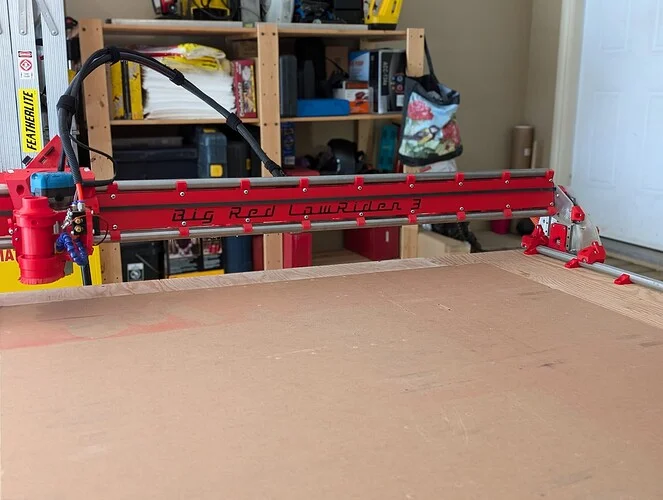
Step 1 was to acquire access to a CNC machine. I decided to build my own! I found a site online where there are all of the plans, instructions and files to make a full sheet CNC machine using a 3D printer and a few store bought items (stepper motors, belts, controller, machine screws, etc.).
Here is the result:

I have a couple of threads on their forum that go into all of the details of the build process, if anyone is interested in that.
https://forum.v1e.com/t/introducing-big-red-lowrider-3/45509
https://forum.v1e.com/t/bartmans-lr3-build-thread-a-new-bie-adventure/38996
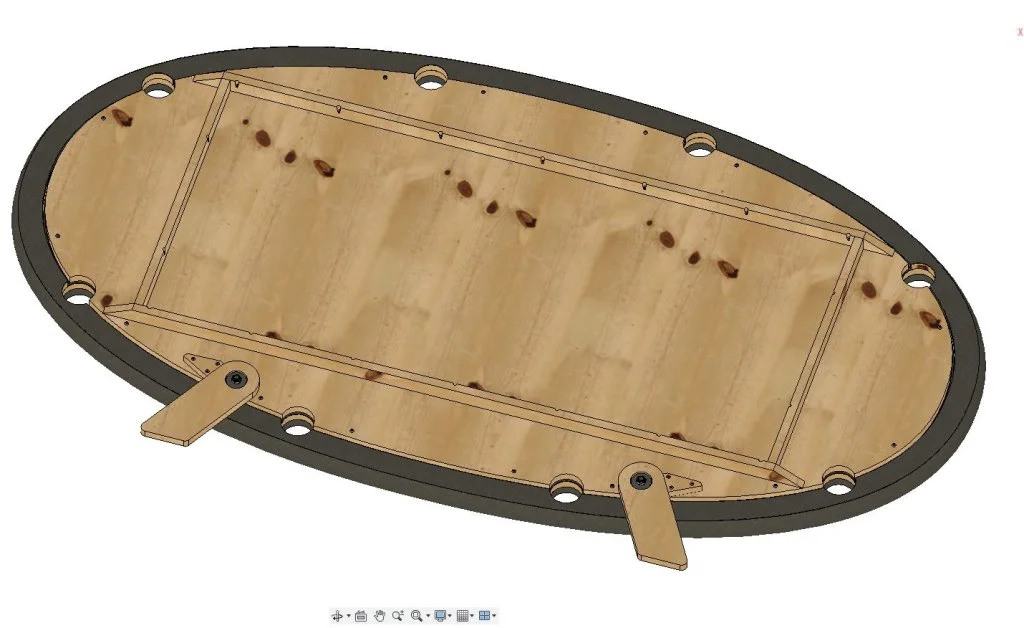
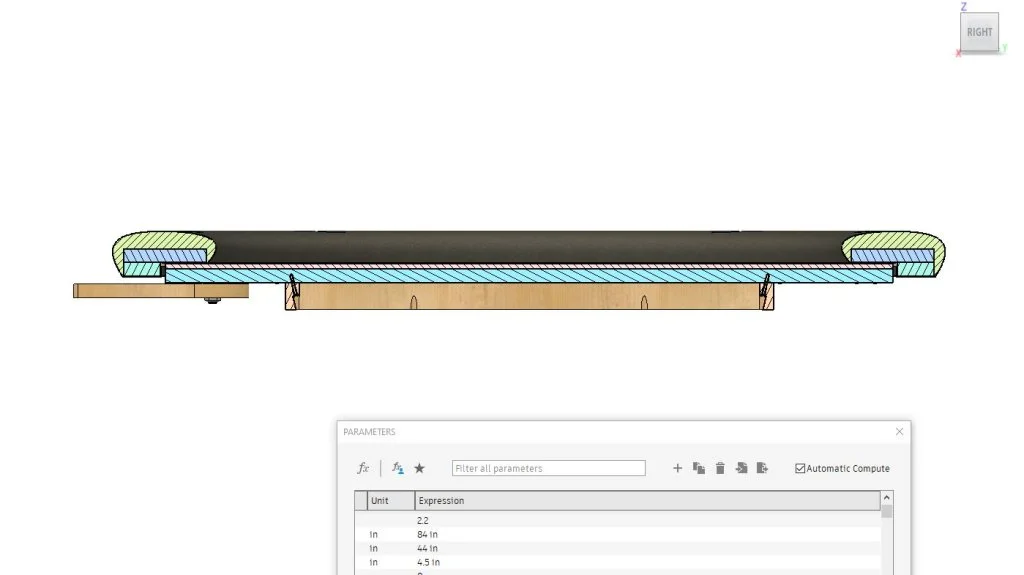
Step 2 was to design a 3D model of the table, so that I could play around with different parameters (length, width, "n" value, number of seating positions, placement of cup holders, etc.) and see what the table would look like with different shapes. I also wanted to make sure that all of the parts fit together, with no interference (lining up the rail bolts so they weren't covered by the kickstand legs, etc.).
I used a program called Fusion. It has a free "Personal Use" license, which is great, because I'm a cheap bastard. After a bit of a learning curve, I designed a fully parameterized 3D model of the table.
Step 3 was to export the table design from Fusion to a program that would create the "g-code" that the CNC uses to cut the parts. I exported the designs as a 2D drawing (DXF file), and then used a program called EstlCAM to create the gcode file.
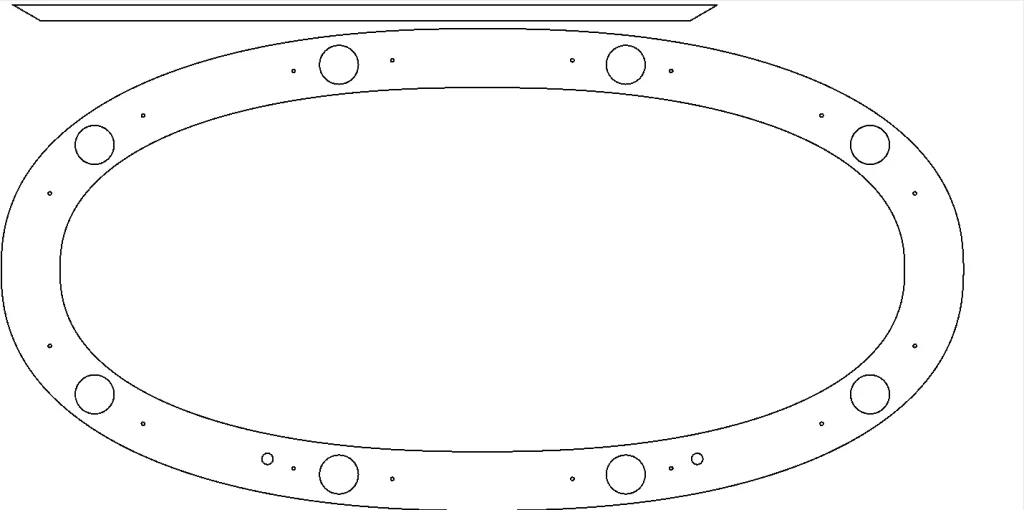
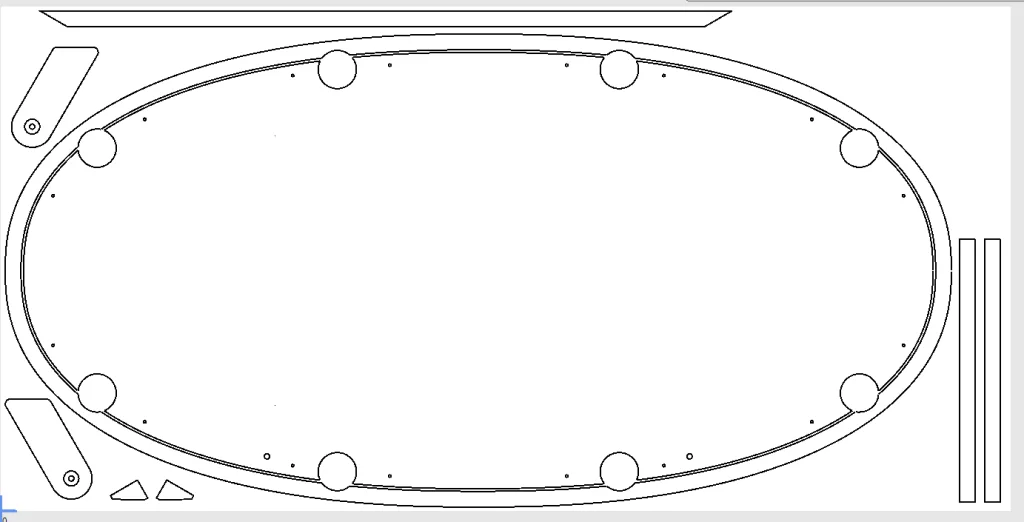
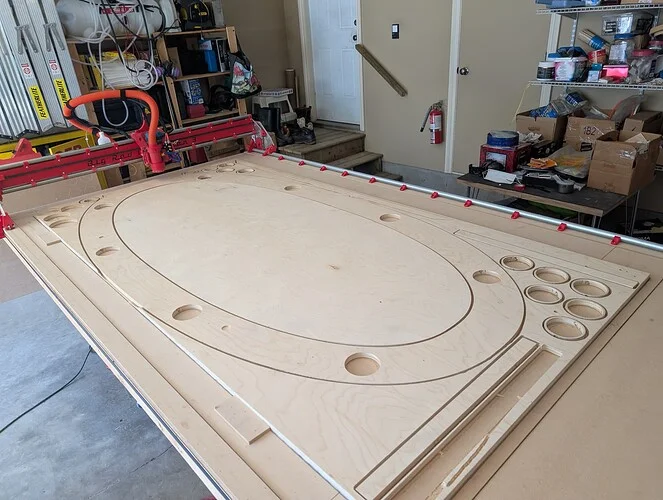
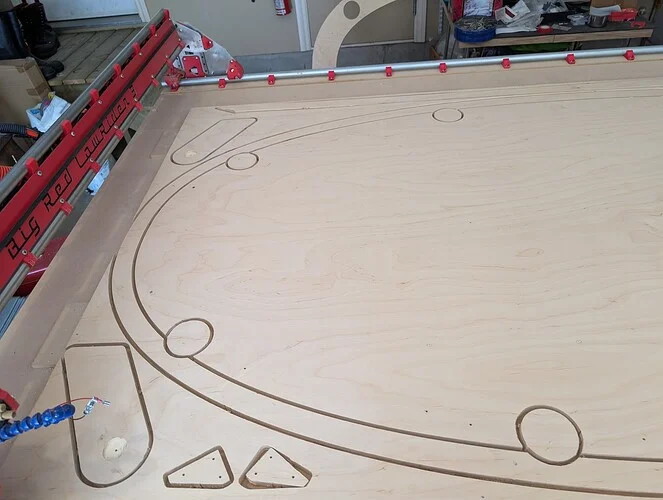
Step 4 was to actually cut the plywood using the CNC machine.
Step 5 was to assemble all of the wood parts together.
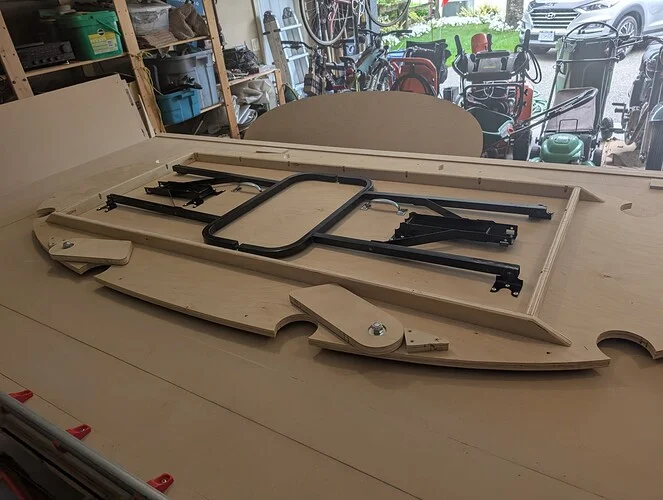
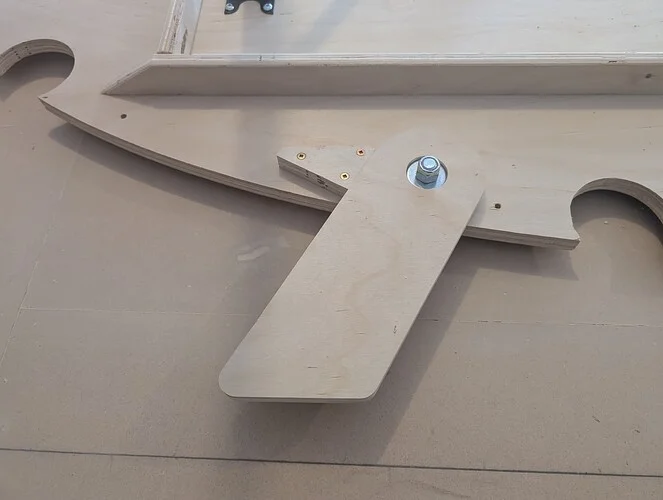
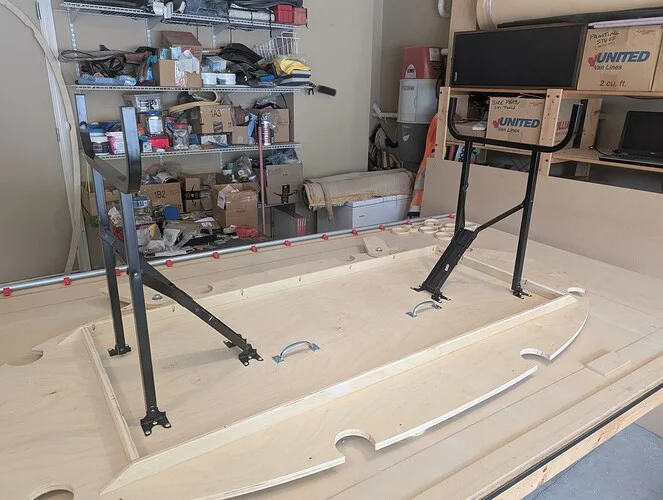
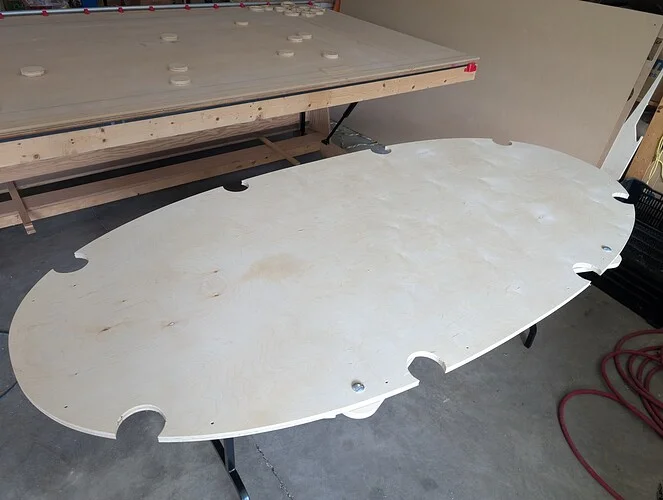
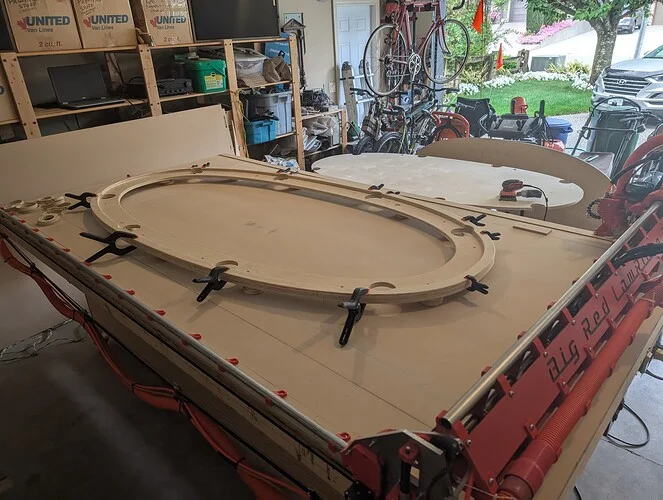
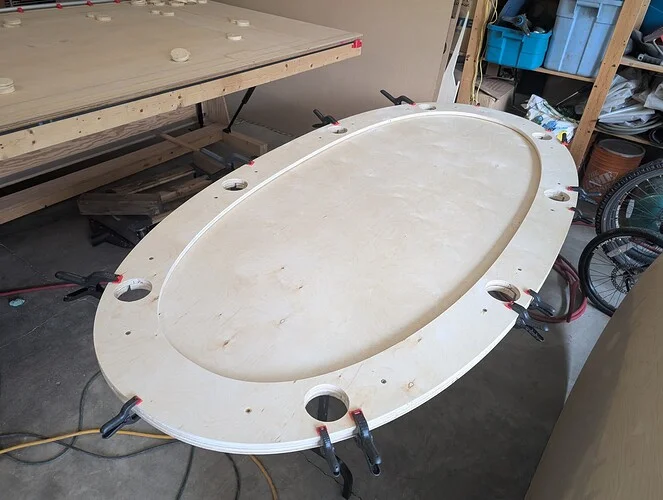
I added some cup holder rings that I cut using the CNC
![PXL_20250902_043559262[1].webp](https://www.pokerchipforum.com/attachments/pxl_20250902_043559262-1-webp.1560999/ "PXL_20250902_043559262[1].webp")
Step 6 was to install the foam and vinyl to the rail.
This proved to be the most challenging part. I used some gel cell batteries to hold the foam in place while the adhesive was bonding with the foam.
![PXL_20250903_215004402[1].webp](https://www.pokerchipforum.com/attachments/pxl_20250903_215004402-1-webp.1560967/ "PXL_20250903_215004402[1].webp")
The foam turned out pretty well
![PXL_20250904_185716537[2].webp](https://www.pokerchipforum.com/attachments/pxl_20250904_185716537-2-webp.1560969/ "PXL_20250904_185716537[2].webp")
The vinyl was a bit tricky. The sharper corners were a challenge to get rid of all the wrinkles. In the end, I ended up living with some wrinkles on the bottom, they aren't visible from the players seats.
![PXL_20250905_172605607[2].webp](https://www.pokerchipforum.com/attachments/pxl_20250905_172605607-2-webp.1560972/ "PXL_20250905_172605607[2].webp")
![PXL_20250905_172759309[1].webp](https://www.pokerchipforum.com/attachments/pxl_20250905_172759309-1-webp.1560973/ "PXL_20250905_172759309[1].webp")
I've hit the limit on # of photos in a single post, so I'll continue in the next post...
I posted a thread trying to figure out how to cut the shape accurately, and the conclusion that I reached was that a CNC machine was the only way that I could get the precision that I wanted.
I posted another thread where I talked about the Super-Ellipse/Lamé Curve, and showed a few examples of the shape and size that I was looking to build.
Step 1 was to acquire access to a CNC machine. I decided to build my own! I found a site online where there are all of the plans, instructions and files to make a full sheet CNC machine using a 3D printer and a few store bought items (stepper motors, belts, controller, machine screws, etc.).
Here is the result:
I have a couple of threads on their forum that go into all of the details of the build process, if anyone is interested in that.
https://forum.v1e.com/t/introducing-big-red-lowrider-3/45509
https://forum.v1e.com/t/bartmans-lr3-build-thread-a-new-bie-adventure/38996
Step 2 was to design a 3D model of the table, so that I could play around with different parameters (length, width, "n" value, number of seating positions, placement of cup holders, etc.) and see what the table would look like with different shapes. I also wanted to make sure that all of the parts fit together, with no interference (lining up the rail bolts so they weren't covered by the kickstand legs, etc.).
I used a program called Fusion. It has a free "Personal Use" license, which is great, because I'm a cheap bastard. After a bit of a learning curve, I designed a fully parameterized 3D model of the table.
Step 3 was to export the table design from Fusion to a program that would create the "g-code" that the CNC uses to cut the parts. I exported the designs as a 2D drawing (DXF file), and then used a program called EstlCAM to create the gcode file.
Step 4 was to actually cut the plywood using the CNC machine.
Step 5 was to assemble all of the wood parts together.
I added some cup holder rings that I cut using the CNC
Step 6 was to install the foam and vinyl to the rail.
This proved to be the most challenging part. I used some gel cell batteries to hold the foam in place while the adhesive was bonding with the foam.
The foam turned out pretty well
The vinyl was a bit tricky. The sharper corners were a challenge to get rid of all the wrinkles. In the end, I ended up living with some wrinkles on the bottom, they aren't visible from the players seats.
I've hit the limit on # of photos in a single post, so I'll continue in the next post...
Last edited: