

Happy Holidays everyone. I’ve got some down time at the in-laws’ and have been reflecting on my first year of hosting games, so I thought I’d share here in case it helps anyone or sparks some discussion.
Thanks to the help of a lot of people here I was able to get a monthly game off the ground out of the living room in my apartment in Brooklyn starting in April. We play $1/$2 with an optional $5 and some nights it’s gotten relatively deep.
Your mileage may vary depending on your game, stakes, players, space, etc… but here are some of my takeaways, beyond the usual stuff discussed here, based on my experience hosting and playing in other home games, in no particular order.
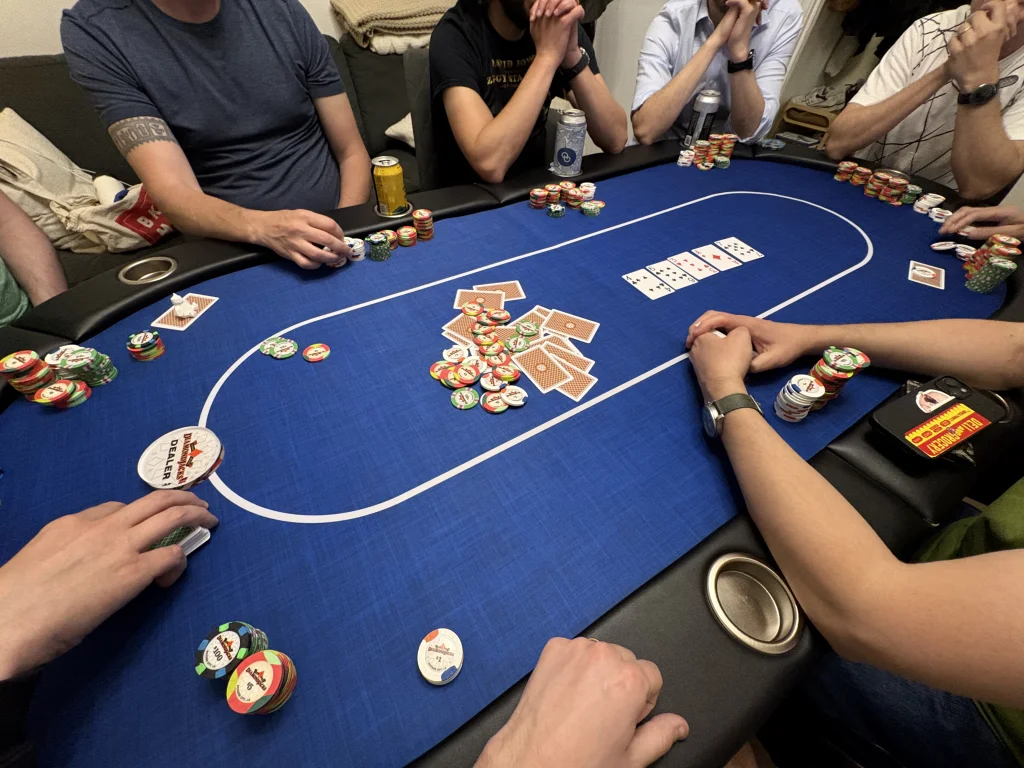
1. Dealer “shifts” > deal on the button
If you don’t have a dedicated dealer, having trusted players take turns over a set amount of time is much more efficient than dealing on the button. During that set of time, one player is responsible for keeping the action going, instead of having to ask whose deal it is, did the button move, etc… and everyone else can relax. It can also help players feel more invested in the game.
2. Hosting, banking, dealing, playing. Pick three.
The first time I hosted I also dealt full-time, and I realized that was too much. You can’t do everything all night. If you’re using the dealing method mentioned above, you should feel comfortable excluding yourself from the rotation.
3. Start with all of the small denoms on the table. Only give rebuys in big chips.
For me, this means 100 whites + roughly two barrels of reds per player are in play from the jump. Once the game starts, I am giving out greens and blacks (and the occasional purple) only. Counting out small chips during play slows the game down and increases the chance of your count being off at the end of the night.
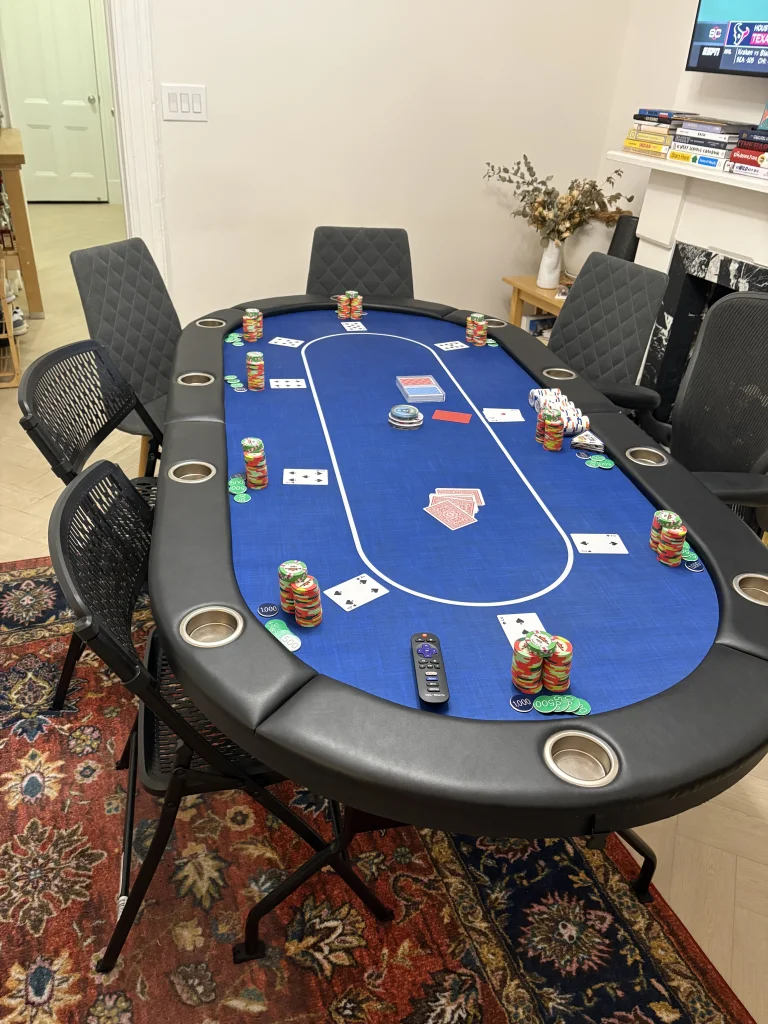
4. Communicate and enforce clear rules for buyins, straddles and any side games
Certain players will always want to push action or play exotic bomb pot variations, while others will not.
Neither are “right” or “wrong.” You can adjust your rules based on how you want a given game to play, and as long as you consistently enforce them, players can make their own decisions about whether and how to play.
Example: $1/$2 with an optional $5 straddle. $300 buyin/max. After 90 minutes, the max goes up to $500 or half the big stack. Double board PLO bomb pots on the hour and after a monotone or mono rank flop.
5. Your banking system needs a “double optin”
There are lots of discussions here about how to bank a game, especially in a digital-first world, but whatever you choose needs an acknowledgement from both parties of a transaction. I’ve detailed the system I use here, but this can also include pay-as-you-go (cash or digital) or a text ledger with both parties acknowledging a buyin or rebuy. Just say no to verbal rebuys with the host keeping a sheet.
6. Don’t be afraid to curate
There is a local pool of regulars that I play with and tried at first to give equal opportunity to for my games. But at some point I stopped caring about “fairness” and instead invite players based on who I enjoy spending time with, who is good for the game, etc… At the end of the day I’m inviting people into my home and won’t apologize for being picky about who comes over.
7. Find a simple, personal touch for an amenity
You don’t have to provide a full spread of food and drinks (though I know some of you are into that). But having something can go a long way.
I’ve started batching old fashioneds. They’re easy to make, and the players seem to enjoy them.
8. The game will always start 30 minutes after you tell people it will
If you want cards in the air at 8, tell people the game starts at 7:30.
Thanks to the help of a lot of people here I was able to get a monthly game off the ground out of the living room in my apartment in Brooklyn starting in April. We play $1/$2 with an optional $5 and some nights it’s gotten relatively deep.
Your mileage may vary depending on your game, stakes, players, space, etc… but here are some of my takeaways, beyond the usual stuff discussed here, based on my experience hosting and playing in other home games, in no particular order.
1. Dealer “shifts” > deal on the button
If you don’t have a dedicated dealer, having trusted players take turns over a set amount of time is much more efficient than dealing on the button. During that set of time, one player is responsible for keeping the action going, instead of having to ask whose deal it is, did the button move, etc… and everyone else can relax. It can also help players feel more invested in the game.
2. Hosting, banking, dealing, playing. Pick three.
The first time I hosted I also dealt full-time, and I realized that was too much. You can’t do everything all night. If you’re using the dealing method mentioned above, you should feel comfortable excluding yourself from the rotation.
3. Start with all of the small denoms on the table. Only give rebuys in big chips.
For me, this means 100 whites + roughly two barrels of reds per player are in play from the jump. Once the game starts, I am giving out greens and blacks (and the occasional purple) only. Counting out small chips during play slows the game down and increases the chance of your count being off at the end of the night.
4. Communicate and enforce clear rules for buyins, straddles and any side games
Certain players will always want to push action or play exotic bomb pot variations, while others will not.
Neither are “right” or “wrong.” You can adjust your rules based on how you want a given game to play, and as long as you consistently enforce them, players can make their own decisions about whether and how to play.
Example: $1/$2 with an optional $5 straddle. $300 buyin/max. After 90 minutes, the max goes up to $500 or half the big stack. Double board PLO bomb pots on the hour and after a monotone or mono rank flop.
5. Your banking system needs a “double optin”
There are lots of discussions here about how to bank a game, especially in a digital-first world, but whatever you choose needs an acknowledgement from both parties of a transaction. I’ve detailed the system I use here, but this can also include pay-as-you-go (cash or digital) or a text ledger with both parties acknowledging a buyin or rebuy. Just say no to verbal rebuys with the host keeping a sheet.
6. Don’t be afraid to curate
There is a local pool of regulars that I play with and tried at first to give equal opportunity to for my games. But at some point I stopped caring about “fairness” and instead invite players based on who I enjoy spending time with, who is good for the game, etc… At the end of the day I’m inviting people into my home and won’t apologize for being picky about who comes over.
7. Find a simple, personal touch for an amenity
You don’t have to provide a full spread of food and drinks (though I know some of you are into that). But having something can go a long way.
I’ve started batching old fashioneds. They’re easy to make, and the players seem to enjoy them.
8. The game will always start 30 minutes after you tell people it will
If you want cards in the air at 8, tell people the game starts at 7:30.


 )
)


