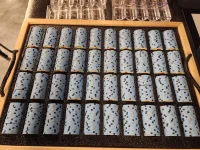
- Four-color decks are vastly superior to two-color decks.
See: https://www.pokerchipforum.com/threads/love-for-4-color-suits.137424/post-2798762
And: https://www.pokerchipforum.com/threads/4-color-decks-yay-or-nay.109333/post-2326533
To me, this ought to be the least controversial of all the items listed. But nooooo...
Card games like poker require players to be able to “read” their cards and the board clearly. It’s in everyone’s interest to try to minimize card recognition mistakes.
Mistakes can be increased via typographical blunders (for example, choosing a font where the A and 4 look too much alike). More common is misreading suits, especially spades and clubs (which are formally more alike than hearts and diamonds).
Using a distinct color for each suit doubles the chances of eliminating such errors. It’s just obviously and objectively better. You are less like to confuse a blue diamond with a green club with a red heart or a black spade.
Sure, colorblind people may still have issues. But they already have this issue with two colors. (Nothing looks more like red... than red. And nothing looks more like black... Than black.)
So why have two-color decks remained a standard for so long? Doesn’t that suggest that they have survived a test of time? Two main reasons:
(1) My research indicates that two-color decks became a standard thing literally centuries ago, mainly due to the limitations and cost of producing cards in a pre-industrial, let alone pre-desktop context.
It was understood that you needed to differentiate suits, but running four different colors on an old-fashioned press was very labor and ink-intensive. So they just used two, either hand-coloring the face cards, or doing one separate sheet with all the facecards to limit the number of passes necessary. With the advent of modern printing, especially 21st Century printing where adding colors is rarely even a cost increase, this compromise is no longer necessary.
(2) The other reasons are convention, habits, familiarity. People hate design changes in almost anything they have grown accustomed to. Change the design of a popular soda’s can? Your favorite cereal? The layout of the front page of the local newspaper? Those daring to do so had better be ready for a firestorm of complaints, at least at first.
Even if the new design is vastly superior.
Then pretty soon people get used to the change... And like it. Then it gets changed again, rinse and repeat.